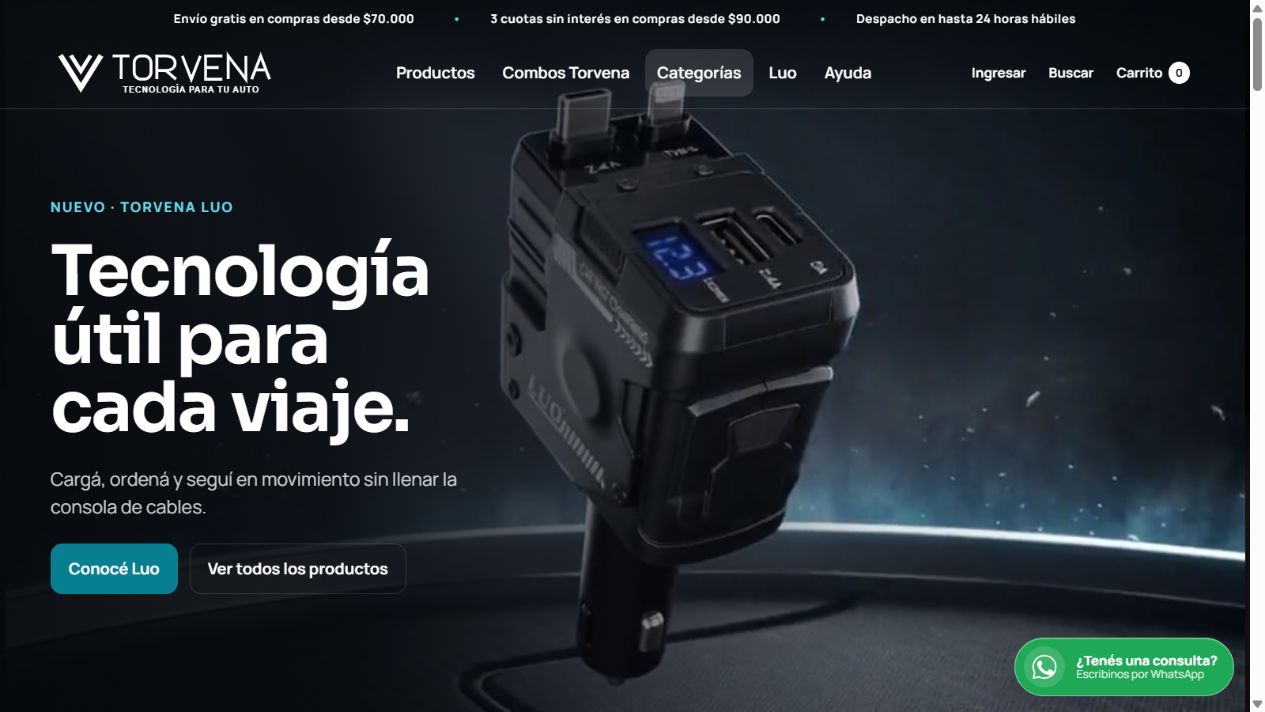
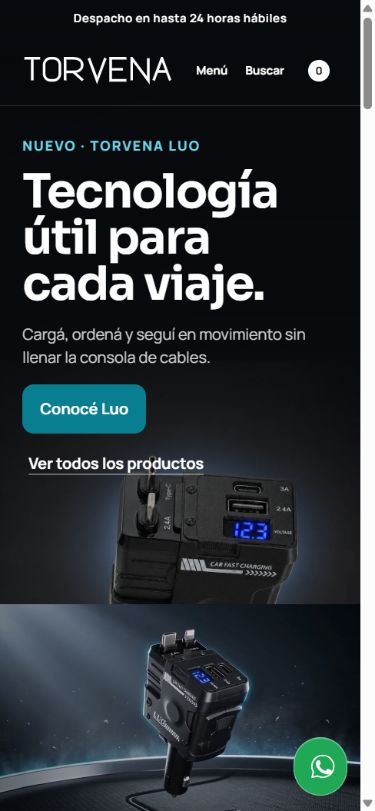
From zero to an Argentine e-commerce business operated firsthand: brand, catalog, storefront, acquisition, measurement and operations connected as one system.
Torvena began without a name, brand, catalog, suppliers or sales channel. The challenge was not to implement a predefined store, but to build a business around useful technology for vehicles and learn from real operations.
What I built
The response I built.
I defined the category, brand and offer; built a headless storefront organized around needs such as charging, cleaning, autonomy and organization; and connected catalog, cart, checkout, content, campaigns and a first-party measurement layer.
Key decisions
Decisions that explain the solution.
These are not attributed outcomes; they are verifiable choices in the process and implementation.
01
Navigate by problems, not only categories
The experience prioritizes situations —charging, cleaning, organizing or being prepared— to connect the catalog with real driver needs.
02
Evolve into a headless storefront
After an initial Lovable stage, I rebuilt the experience with Shopify Hydrogen to gain greater control over content, journeys and the visual system.
03
Add a first-party measurement layer
The architecture includes anonymous sessions, UTMs, internal-traffic exclusion and a non-personal link between acquisition and paid orders.
Verified scope
What exists in this version.
Need-led home and navigation
Custom collections and product pages
Bundles, discounts, upsells and benefit progress
Shopify cart and checkout
Predictive search, policies and WhatsApp support
First-party analytics and a protected admin dashboard
Current status
An active operation with measurement still evolving.
The public store, cart and checkout are operational. What is not available yet is private sign-in for customers to access and manage their accounts.
First-party paid-order tracking runs in production and is part of day-to-day operations.
The next step is to add Google Analytics to consolidate traffic, attribution and conversion, and document results against a consistent source and time period.
Verified outcome
Evidence, without inflating the outcome.
01
An active business with real orders and advertising campaigns underway.
02
Nationwide operations combining sales, support, logistics and continuous learning.
03
Verifiable experience building and operating an owned e-commerce business.